

As cybersecurity threats escalate and compliance demands become more complex, protecting data is no longer just one aspect of enterprise security—it’s the foundation of it. A Zero Trust Data-Centric Security model shifts the focus from defending the perimeter to continuously verifying access and protecting sensitive information wherever it resides.
This approach aligns with key federal frameworks like the CISA Zero Trust Maturity Model (ZTMM) and the DoD’s Zero Trust Reference Architecture (ZTRA), both of which identify data as a core pillar of Zero Trust. Instead of assuming trusted users inside a secure perimeter, organizations must validate every access attempt, apply policy-based controls, and ensure real-time enforcement based on context.
At the center of this model is NextLabs’ CloudAz platform, which uses dynamic authorization powered by Attribute-Based Access Control (ABAC), encryption, and digital rights management (DRM). With this unified platform, organizations can protect sensitive data across its entire lifecycle—at rest, in motion, and in use—while supporting operational agility and meeting strict regulatory requirements.
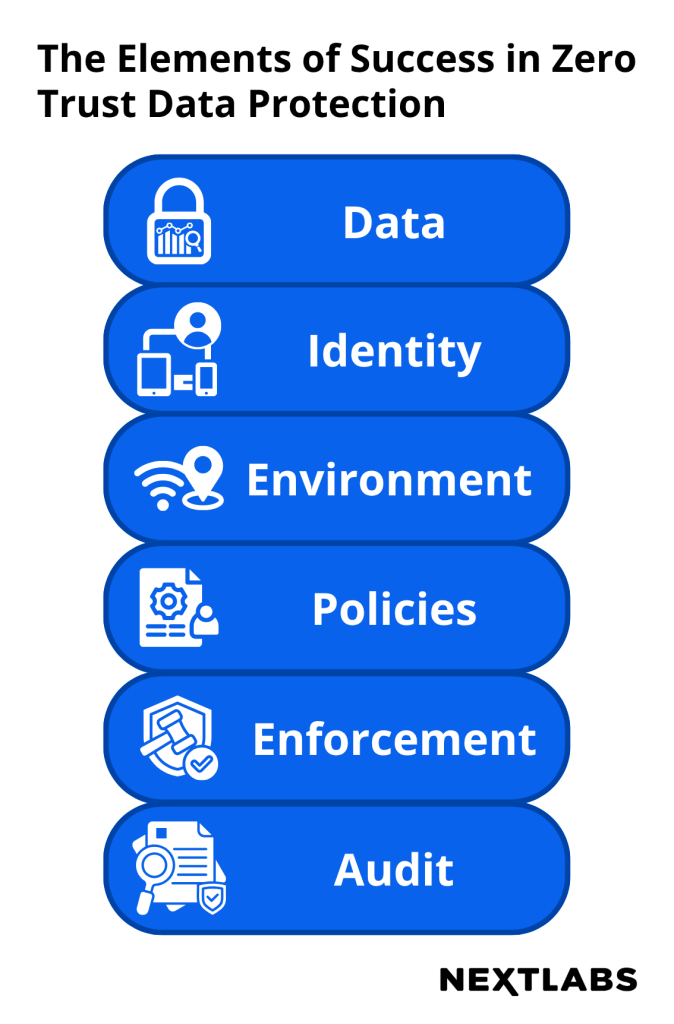
The Six Essential Elements of a Successful Zero Trust Data Protection Strategy
A successful Zero Trust Data Protection strategy includes six essential elements:
- Data – the most valuable asset and primary focus of protection
- Identity – verifying users and devices before granting access
- Environment – understanding contextual factors like location, device, and network
- Policies – fine-grained, context-aware rules based on sensitivity and role
- Enforcement – real-time, dynamic application of those policies
- Audit – continuous monitoring and logging to ensure accountability and compliance
Use Cases
Real-world scenarios highlight the effectiveness of this strategy:
- Mergers and joint ventures: Data segregation ensures sensitive information is only accessible to authorized parties
- Regulatory compliance: Dynamic policies can enforce multiple regulations (like GDPR and HIPAA) simultaneously
- IP protection: ABAC and DRM limit who can view, share, or export trade secrets and design files
- Supply chain collaboration: External partners can access only the data they need—nothing more, nothing less
Core Technologies
Core technologies that enable this architecture include:
- ABAC and PBAC for scalable, adaptive access control
- Data masking, obfuscation, and segmentation to minimize exposure
- DLP and DRM to prevent unauthorized sharing or misuse
- Entitlement management to control user actions at a granular level
Enterprises around the world are using NextLabs to implement these principles at scale—reducing the risk of data breaches, ensuring regulatory alignment, and streamlining secure collaboration across teams and third parties.
A data-centric Zero Trust approach doesn’t just improve cybersecurity. It enhances operational resilience, builds stakeholder trust, and lays the groundwork for secure digital transformation. For organizations looking to stay ahead of today’s evolving threats, this strategy offers a practical, scalable path to stronger, smarter data protection.
Interested in learning more?
To comment on this post
Login to NextLabs Community
NextLabs seeks to provide helpful resources and easy to digest information on data-centric security related topics. To discuss and share insights on this resource with peers in the data security field, join the NextLabs community.
Don't have a NextLabs ID? Create an account.