In today’s complex regulatory environment, traditional segregation of duties (SoD) controls – often focused on detecting violations after the processes are already in motion – fall short in preventing internal risks. Organizations need a proactive approach that prevent fraud, conflicts of interests and unauthorized access before they occur. Preventive SoD does just that: it proactively assigns roles, define access boundaries, and enforce controls in real time. By eliminating risky overlaps, organizations can reduce risks, strengthen internal controls, and ensure compliance—ultimately protecting both assets and reputation.
Read our latest white paper to learn how preventive SoD can assist your organization reduce risk, stay compliant, and drive governance.
Streamline Compliance for a Complex Cloud Environment
The compliance landscape is evolving at a rapid pace, with new regulations, frameworks, and benchmarks being adopted to address the challenges of the exponential growth of data collected by organizations. These regulations encompass not only data protection and privacy but areas such as cybersecurity and environmental standards. As organizations migrate from on-premises data centers to cloud-based infrastructure, legacy controls often fall shorts in maintaining compliance across diverse operational domains. To fully benefit from the cloud while maintaining regulatory alignment, organizations need to implement a modern, robust security measures, regular audits, and continuous monitoring to safeguard against the increasing threat of data breaches.
Explore our latest solution brief to learn how enterprises are modernizing cloud compliance strategies to improve control, reduce risk exposure, and ensure readiness for evolving regulations
A Belgian multinational chemical company, Solvay, faces mounting compliance pressure from overlapping export control and EH&S regulations. But the outdated ‘castle and moat’ security model left them exposed to policy gaps and audit risks. To meet regulatory demands and protect confidential data within their SAP system, they adopted a technology-driven security solution which emphasizes dynamic data-level security controls and fine-grained data access governance.
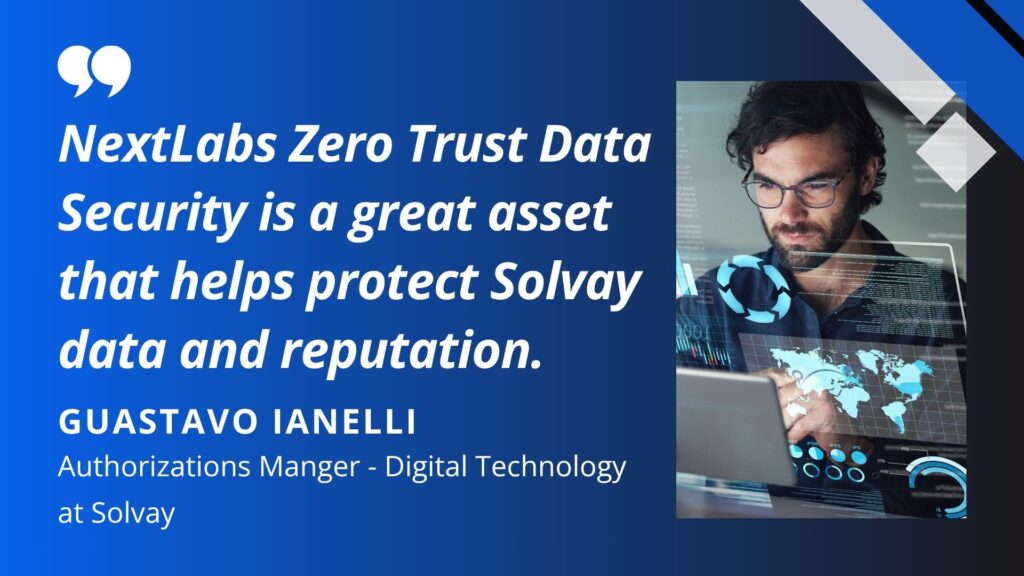
Read the full customer story or watch the latest video testimonial where Guastavo Ianelli, Authorizations Manger from Solvay, shares how the company ensures compliance for their SAP ecosystem usingdynamic authorization and centralized policy control.
Build Resilience Against Compliance Violations from Ransomware
Ransomware attacks are no longer just an IT issue – they’re a regulatory and operational risk. In 2023, ransomware attacks accounted for about 70% of all reported cyberattacks worldwide, with over 317 million attempts recorded. Such attacks lead to financial losses, disrupt operations, and result in compliance penalties for organizations of all sizes. For compliance and risk teams, the stakes are higher than ever. While it’s difficult to completely prevent ransomware attacks, organizations can neutralize their impact by implementing a preventive security model focused on securing sensitive digital assets at the source.
Explore the latest whitepaper where it breaks down the range of protective security measures that large-scale companies utilize to neutralize the impact of ransomware threats.
To comment on this post Login to NextLabs Community
NextLabs seeks to provide helpful resources and easy to digest information on data-centric security related topics. To discuss and share insights on this resource with peers in the data security field, join the NextLabs community.


To comment on this post
Login to NextLabs Community
NextLabs seeks to provide helpful resources and easy to digest information on data-centric security related topics. To discuss and share insights on this resource with peers in the data security field, join the NextLabs community.
Don't have a NextLabs ID? Create an account.