The greatest security risks are not always at the perimeters. Edward Snowden did not breach a firewall. He simply held access far broader than his role required. NIST SP 800-53 exists to close that gap, providing a comprehensive framework for protecting organizations against insider threats, cyberattacks, and human error alike.
NIST defines information security risk management as a six-step lifecycle, from categorizing systems through continuous monitoring. This paper concentrates on Step 2, which is the selection of security controls, the point at which an organization translates risks into concrete safeguards.
Selecting Security Controls
Control selections begin with baselines matched to a system’s impact level, but these baselines are guidelines rather than mandates, designed to be tailored to each organization’s specific needs. NIST organizes controls into 18 families. However, this paper dives deeper into the one most central to insider-threat defense: Access Control (AC).
Baseline Access Control
The Access Control (AC) family in NIST SP 800-53 defines how organizations manage who can access what, and under what conditions. It comprises 25 distinct controls per baseline. The controls are allocated to the low-impact, moderate-impact, and high-impact security baselines and the privacy control baseline, as appropriate.
Impact of NIST 800-53 Revision 4
Compliance is neither narrow nor optional. Federal agencies are required to adopt the Risk Management Framework (RMF), which specifically requires the implementation of the NIST SP 800-53 framework for improving critical infrastructure security. Defense contractors are bound to its access control provisions through DFARS and NIST SP 800-171. A growing number of commercial enterprises are standardizing on SP 800-53 in place of legacy framework. The result is a standard with reach across the public and private sector alike.
How NextLabs Addresses NIST 800-53 Requirement
With the NextLabs platform, governmental agencies and departments can satisfy the application and data security requirements, especially those that pertain to the security control baselines.
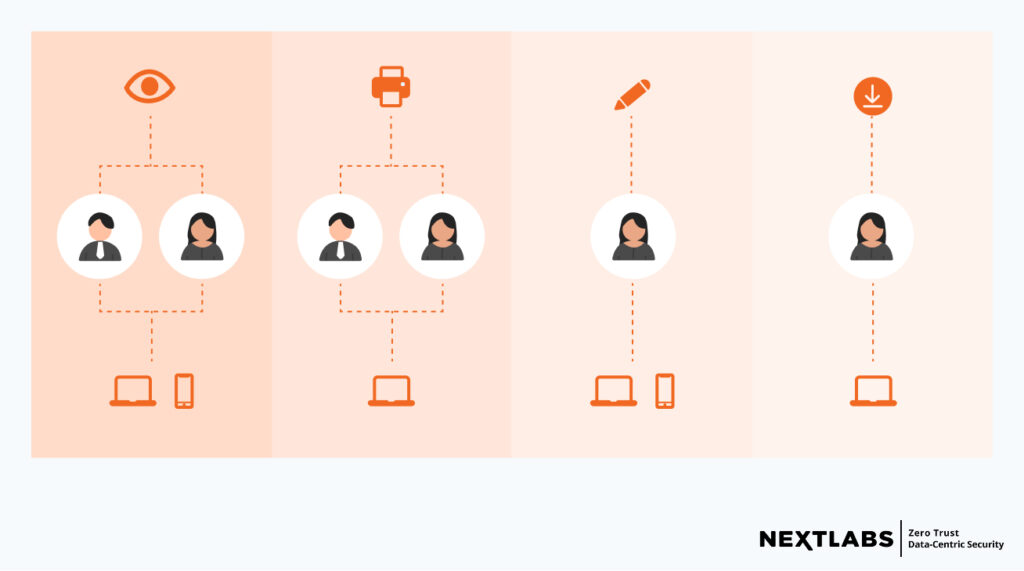
Enforcement of Least Privilege / Need-to-Know
Least privilege and need-to-know enforcement restricts access to precisely what an individual’s role justifies, whether data is at rest or in motion.
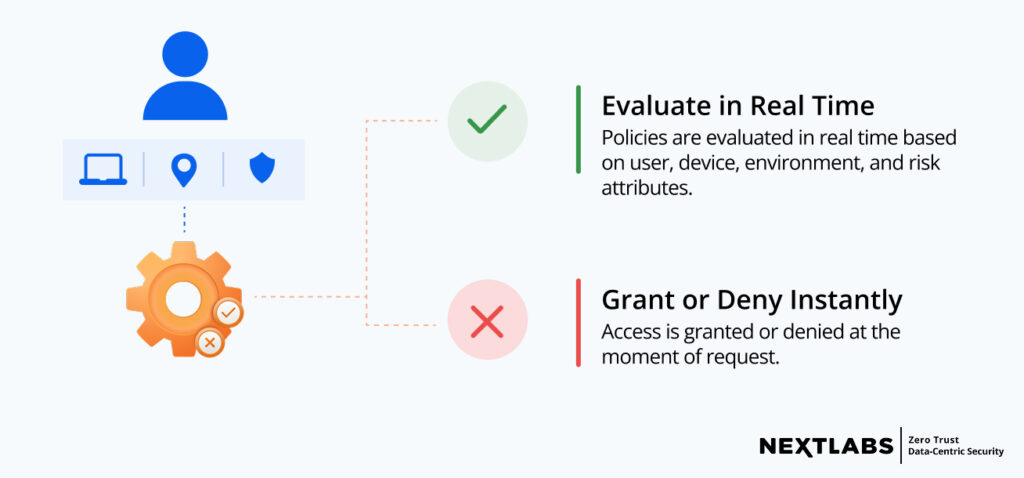
Dynamic Privilege Management
Dynamic privilege management evaluates policies in real time, granting or denying access at the moment of request based on current user and environmental attributes.
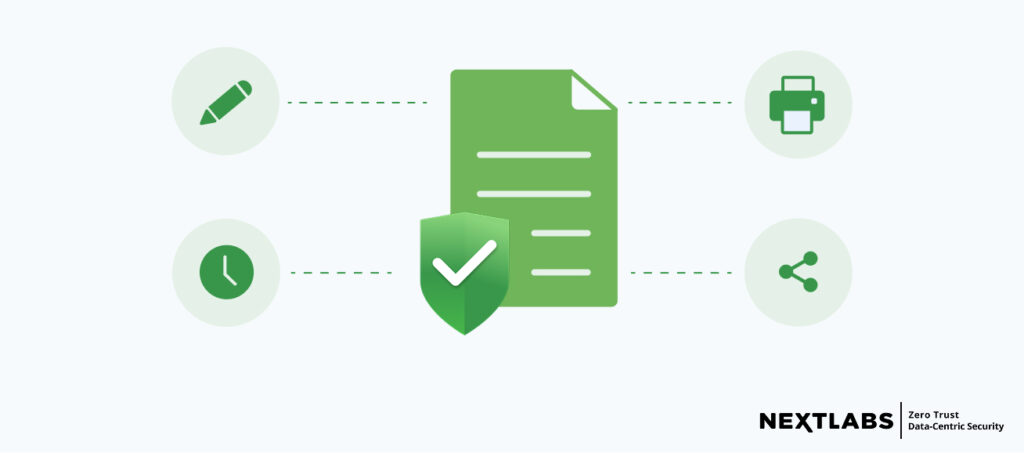
Enforcement of Usage Controls
Usage controls extend protection beyond the point of access, governing actions such as editing, printing, resharing, and expiring.
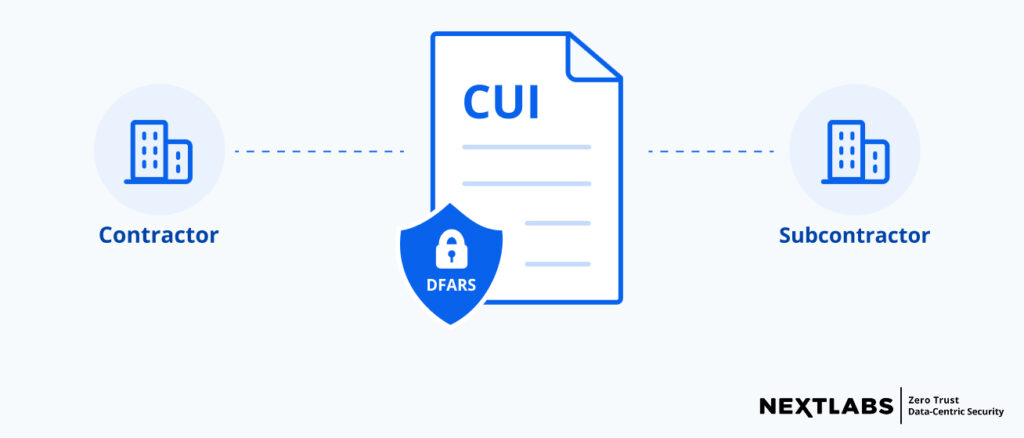
Ensuring of DFARS Compliance
For Department of Defense contractors, safeguarding Controlled Unclassified Information (CUI) is the minimum standard of entry. NextLabs enables organizations to meet these obligations across both contractor and subcontractors’ tiers.
Benefits of the NextLabs Platform
The platforms delivers measurable gains in both security and efficiency: sensitive data remains protected across business-critical applications; secure and non-secure data coexist safely on shared infrastructure; compliance with regulations such as GPDR, HIPAA, ITAR/EAR, and SOX becomes enforceable and auditable; and management costs fall even as business agility improves.
Download the full White Paper
Explore the full Access Control family, the specific baseline requirements across impact levels, and how NextLabs maps directly to each.